Why Your Emergency Fund Should Never Just Sit Idle
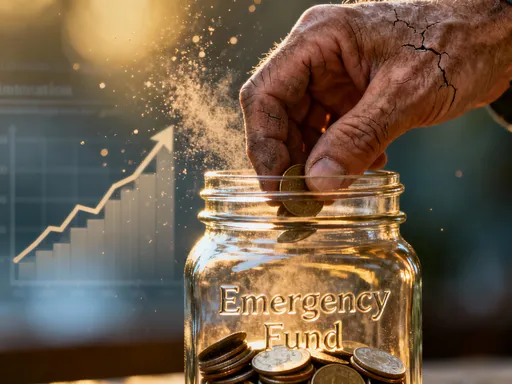
You’ve probably heard it a hundred times—build an emergency fund. But what if I told you that simply stashing cash isn’t enough? I learned this the hard way after watching my savings lose ground to inflation. A true emergency fund should balance safety, access, and some growth. In this piece, I’ll walk you through how to structure your fund the professional way—keeping it secure while giving it quiet momentum. It’s not about high returns; it’s about return stability and preserving what you’ve worked so hard to save.
The Hidden Cost of "Safe" Cash
For many households, the idea of financial safety begins and ends with cash. The logic seems straightforward: money in a savings account is protected, insured, and instantly available when needed. This mindset has deep roots in traditional financial advice, especially for those prioritizing security over growth. But while capital preservation is a critical goal, the belief that “safe” means “motionless” carries a hidden cost—one that compounds silently over time. That cost is inflation. When the return on your emergency savings falls below the rate of inflation, your money may remain numerically the same, but its real-world purchasing power diminishes. You haven’t lost dollars, but you’ve lost value.
Consider a recent ten-year period in which average annual inflation hovered around 2.5%. If your savings earned only 0.5% annually, your effective loss in purchasing power was roughly 2% per year. Over a decade, this erosion can reduce the real value of your fund by nearly 20%. This means a $10,000 emergency fund today might only stretch as far as $8,000 did ten years ago. For a family managing household expenses, this gap can mean the difference between covering an unexpected repair and falling into debt. The danger lies not in risk-taking, but in the illusion of safety created by inaction. Many people assume their money is “safe” because it’s not exposed to market swings, but they overlook the steady, predictable pressure of rising prices.
This phenomenon is not theoretical—it’s been observed across multiple economic cycles. During periods of low interest rates, such as the decade following the 2008 financial crisis, many savers kept funds in traditional bank accounts yielding less than 1%, while inflation chipped away at their balances. Even today, with slightly higher yields, the risk remains if inflation surges unexpectedly. The lesson is clear: true financial safety includes protection against inflation, not just against loss of principal. An emergency fund that doesn’t grow at least in line with living costs is not truly secure. It may feel comforting in the short term, but it weakens your long-term resilience. The goal is not to abandon safety, but to redefine it—to include both capital preservation and value maintenance.
Defining Return Stability in Emergency Planning
When discussing emergency funds, the term “return” often makes people uneasy. After all, the primary purpose of such a fund is not to generate wealth but to provide a reliable buffer during unforeseen events. However, this does not mean returns should be ignored altogether. What matters is not the size of the return, but its stability. Return stability refers to consistent, predictable performance with minimal fluctuations. It’s the financial equivalent of a steady hand—calm, dependable, and unlikely to falter under pressure. In the context of an emergency fund, this means choosing instruments that offer slight appreciation over time without introducing volatility or uncertainty.
Professionals evaluate return stability by looking at how an asset behaves during periods of economic stress. For example, a high-yield savings account may offer a modest interest rate, but its value doesn’t drop when stock markets decline. Similarly, short-term U.S. Treasury securities have historically maintained their value even during recessions. These assets don’t promise dramatic gains, but they deliver reliability. That predictability is what makes them suitable for emergency reserves. When building your fund, the focus should shift from “How much can I earn?” to “How consistently can I earn it?” This subtle reframe changes the entire decision-making process. Instead of chasing higher yields that may come with hidden risks, you prioritize instruments that perform as expected, regardless of market conditions.
Another aspect of return stability is behavioral reliability—how likely you are to stick with your strategy when emergencies arise. If your fund is invested in something complex or volatile, you might hesitate to use it when needed, fearing further losses. But if your money is in a stable, transparent vehicle, you’re more likely to access it without second-guessing. This psychological comfort is just as important as the financial mechanics. Return stability, therefore, is not just about the numbers on a screen; it’s about creating a system that supports calm, confident decision-making. It’s about knowing that when life throws a curveball—whether it’s a medical bill, a car breakdown, or a sudden job loss—your money will be there, intact and ready.
Where to Park Your Emergency Cash—Without Taking Unnecessary Risks
Now that we understand the importance of return stability, the next question is where to place your emergency funds. Not all savings vehicles are created equal, and the right choice depends on balancing liquidity, safety, and yield. The good news is that several low-risk options exist that meet these criteria without venturing into speculative territory. Among the most accessible are high-yield savings accounts, money market funds, and short-term government securities. Each has its strengths, and understanding them can help you make informed decisions.
High-yield savings accounts, offered by many online banks, typically provide interest rates significantly higher than traditional brick-and-mortar institutions. These accounts are FDIC-insured up to $250,000 per depositor, per institution, making them one of the safest places to hold cash. Withdrawals are usually immediate, and transfers to linked checking accounts often take just one business day. While yields fluctuate with the federal funds rate, they have recently ranged between 3% and 5%, outpacing inflation in many cases. The main limitation is that some banks impose limits on the number of withdrawals per month, a rule stemming from Regulation D, though enforcement has relaxed since 2020. Still, it’s wise to treat these accounts as purpose-built for emergencies, not everyday spending.
Money market funds are another option, particularly those that invest in short-term government debt. These funds are not FDIC-insured, but they are considered extremely low risk due to their focus on high-quality, short-duration securities. Many major financial institutions offer retail versions that allow check-writing or easy transfers, enhancing liquidity. Historically, these funds have delivered returns slightly above inflation with minimal price volatility. However, unlike bank accounts, their value can fluctuate, albeit by very small amounts. For cautious investors, government money market funds are often preferred over prime (corporate-focused) versions, as they carry even less credit risk.
Short-term U.S. Treasury securities, such as Treasury bills (T-bills), offer another layer of safety. Backed by the full faith and credit of the U.S. government, they are widely regarded as risk-free in terms of default. T-bills mature in periods ranging from four weeks to one year, making them ideal for funds you may need within a short timeframe. They can be purchased directly through TreasuryDirect.gov or through brokerage accounts. One trade-off is that while they are highly liquid, selling before maturity may result in slight gains or losses depending on interest rate movements. However, if held to maturity, you receive the full principal plus interest. For those comfortable with a slightly longer time horizon, laddering T-bills—buying maturities at regular intervals—can provide both steady access and consistent yield.
The Liquidity-Presence Trade-Off
Liquidity is a cornerstone of any emergency fund. When an unexpected expense arises—a broken appliance, a dental procedure, a sudden travel need—you need access to cash quickly, without delays or penalties. This necessity often leads people to keep all their emergency savings in checking or standard savings accounts, where funds are instantly available. While this approach maximizes accessibility, it often sacrifices return stability. The trade-off between liquidity and return is real, but it doesn’t have to be absolute. By understanding the spectrum of liquidity, you can make more strategic choices that balance immediate access with slightly higher yields.
Consider the difference between instant access and next-day settlement. A high-yield savings account may take one business day to transfer funds to your checking account. Is that delay truly a barrier in most emergency scenarios? For many families, a 24-hour wait is manageable, especially if the alternative is leaving money idle for years. Similarly, money market funds and Treasury bills may settle in one or two business days. These minor delays are often outweighed by the benefit of earning a more stable return. The key is to define what “accessible” means in your household. Does it mean same-minute transfers, or does it mean “available within 48 hours”? For most real-life emergencies, the latter is sufficient.
Scenario planning helps clarify this balance. Imagine your car needs $800 in repairs. If your emergency fund is in a high-yield account that takes one day to transfer, you can still get the repair done the next day, possibly by arranging a short deferral with the mechanic. Alternatively, if part of your fund is in a six-month T-bill that matures in three weeks, you might structure your reserves so that a portion is always liquid while another portion earns slightly more over time. This tiered approach allows you to capture better returns without compromising readiness. The goal is not to eliminate liquidity but to optimize it—to ensure that your money is both safe and working, even if not at full capacity. By accepting small, manageable delays, you gain the ability to protect your savings from inflation without exposing them to risk.
Diversifying Within Safety—Yes, It’s Possible
Diversification is often associated with stock portfolios, but it applies just as well to emergency funds. Even within the boundaries of low-risk investing, spreading your reserves across multiple secure vehicles can enhance resilience. The idea is not to complicate your finances, but to reduce dependence on any single institution or account type. If all your emergency savings are in one bank, you’re exposed to that bank’s policies, fees, and potential operational issues. By contrast, holding funds in a combination of FDIC-insured accounts, government money market funds, and short-term Treasuries creates redundancy—multiple layers of protection.
For example, you might keep one-third of your emergency fund in a high-yield savings account at an online bank, another third in a government money market fund, and the final third in a series of maturing T-bills. This structure ensures that no single point of failure can disrupt your access. If one institution changes its interest rate or imposes new restrictions, the other components of your fund remain unaffected. Additionally, different instruments respond differently to interest rate changes, so a diversified mix can smooth out overall performance over time. This doesn’t mean chasing complexity; it means building a system that remains stable even when individual parts shift.
Another benefit of diversification is psychological. When your emergency fund is spread across clearly defined accounts, each with a specific role, it becomes easier to manage and monitor. You’re less likely to dip into the fund for non-emergencies because the structure reinforces discipline. For instance, seeing a T-bill balance that’s set to mature in two months creates a mental boundary—you know that money is earmarked for future access, not today’s convenience. This kind of mental accounting supports long-term consistency. Diversification within safety is not about maximizing returns; it’s about minimizing vulnerabilities while maintaining clarity and control.
Behavioral Discipline: The Invisible Guardrail
No financial strategy succeeds without discipline, and emergency funds are no exception. The most carefully structured plan can unravel if you withdraw funds for non-essential expenses or shift them impulsively toward higher-yielding but riskier options. This is where behavioral discipline becomes the invisible guardrail—the force that keeps your strategy on track. It’s not enough to choose the right accounts; you must also cultivate the habits and mental frameworks that protect your fund over time.
One effective approach is to define what qualifies as a true emergency. For many families, this includes unexpected medical costs, urgent home or car repairs, job loss, or essential travel due to family events. Non-emergencies—such as vacations, holiday shopping, or discretionary upgrades—should not draw from this fund. Writing down your criteria and reviewing them periodically can reinforce this boundary. Another powerful tool is account separation. Keeping your emergency fund in a separate bank from your everyday accounts creates a psychological barrier. The extra step of logging into a different platform or initiating a transfer adds friction, which reduces impulsive withdrawals.
Automation also plays a crucial role. Setting up automatic monthly transfers to your emergency account ensures consistent growth without requiring constant attention. Similarly, using calendar alerts to review your fund’s balance and performance every quarter helps maintain awareness without obsession. Mental accounting—treating your emergency fund as a distinct category of money—further strengthens discipline. When you see it not as “extra cash” but as “financial armor,” you’re less likely to erode it. Stability, in this sense, is as much about mindset as it is about mechanics. The most resilient emergency funds belong to those who treat them with intention, clarity, and respect.
Building Your Own Stability-Focused Emergency Framework
Putting it all together, constructing a stability-focused emergency fund is not about finding a single perfect account, but about designing a thoughtful, personalized system. Start by assessing your monthly essential expenses—housing, food, utilities, insurance, transportation. Most financial planners recommend saving three to six months’ worth of these costs, depending on your job security and family situation. Once you’ve determined your target amount, the next step is to allocate it across different low-risk vehicles based on your liquidity needs and comfort level.
A simple framework might include three tiers. The first tier—your most liquid portion—could be 30% of your fund, held in a high-yield savings account for immediate access. The second tier—30%—might go into a government money market fund, offering slightly higher yield with one-day settlement. The final tier—40%—could be invested in a ladder of short-term T-bills, maturing every three to six months, providing steady returns and predictable access. This structure ensures that part of your money is always available, while the rest earns quietly in the background.
Regular reviews are essential. Every six months, reassess your fund’s performance, interest rates, and personal circumstances. If inflation rises, you may need to adjust your allocation to maintain real value. If your income changes, your emergency target may need updating. The key is consistency, not perfection. A stable return isn’t achieved through sudden moves, but through steady, informed choices over time. With the right setup, your emergency fund becomes more than a safety net—it becomes a quietly resilient foundation, protecting your family’s peace of mind for years to come.