How I Built a Smarter Emergency Fund Without Risking a Dime
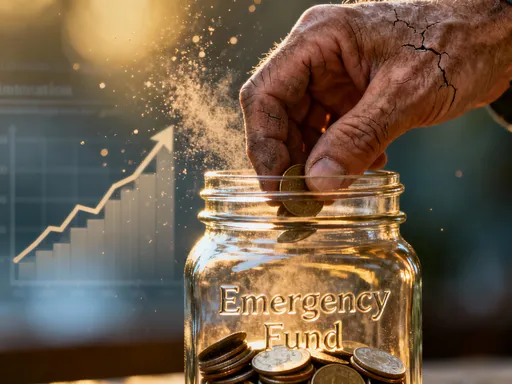
What if your emergency fund could do more than just sit there? I used to think safety meant zero risk — until I realized I was losing value without even knowing it. After a surprise car repair wiped out half my savings, I started rethinking everything. Turns out, how you structure your emergency fund is just as important as having one. Here’s how I learned to balance security, access, and subtle growth — without gambling on the market.
The Myth of the “Safe” Savings Account
For years, I believed the safest place for emergency money was a traditional savings account at my local bank. It felt secure, familiar, and accessible. There were no market swings, no confusing terms, and I could withdraw funds anytime without penalty. But over time, I noticed something troubling: while the dollar amount stayed the same, the things I could buy with it were shrinking. That’s when I began to understand the hidden cost of inflation — and how it quietly undermines even the most “secure” financial decisions.
Inflation has averaged around 2% to 3% annually over the past few decades in many developed economies. That means every year, the purchasing power of money in a low-yield account drops by that amount. If your savings account earns only 0.01% interest — which many still do — you're effectively losing money in real terms. This isn’t speculation; it’s basic financial math. A $10,000 emergency fund earning near-zero interest will buy significantly less five or ten years down the road, even if the balance never changes. True financial safety isn’t just about avoiding losses — it’s about preserving value.
The belief that a regular savings account is the only safe option comes from a well-intentioned place. We’re taught to avoid risk, especially with money we might need suddenly. But risk isn’t just volatility — it’s also erosion. By focusing solely on nominal safety (keeping the number the same), many people overlook real safety (keeping the buying power intact). I made this mistake for years, thinking I was being cautious when I was actually being passive. The wake-up call came when I needed to replace a water heater, and the cost was 20% higher than it had been just three years earlier. My fund hadn’t grown at all, but my expenses had.
This doesn’t mean traditional savings accounts have no place. They do — especially as part of a broader strategy. But they shouldn’t be the entire strategy. The goal of an emergency fund isn’t to generate wealth, but it also shouldn’t allow silent losses. Recognizing the difference between perceived safety and actual financial protection is the first step toward building a smarter fund. Once I accepted that low returns could be a form of risk, I started looking for alternatives that offered better returns without sacrificing security.
Defining Your Emergency Fund’s Real Purpose
Before making any changes, I took a step back and asked myself a simple but critical question: What is this money really for? At first, I thought the answer was obvious — it’s for emergencies. But when I dug deeper, I realized I didn’t have a clear definition of what counted as an emergency. Was it car repairs? Medical bills? Job loss? Home maintenance? And how long would I need to cover myself if income stopped?
These questions mattered because they shaped how much I needed and how I should manage the fund. A $1,000 buffer for minor car trouble has different requirements than a six-month income reserve for unemployment. Without clarity, it’s easy to either under-save or over-save — both of which come with costs. Under-saving leaves you vulnerable; over-saving ties up money that could be used for other goals, like paying off debt or investing for retirement.
After reviewing my own financial history, I identified the most likely emergencies: unexpected medical expenses, urgent home or car repairs, and temporary job loss. I also considered how long each scenario might last. A broken appliance might require a few hundred dollars and a quick fix. A job search, however, could take months. Based on this, I determined I needed enough to cover three to six months of essential living expenses — a common guideline supported by financial planners.
But the purpose of the fund isn’t just financial — it’s emotional, too. Knowing I had a reliable cushion reduced anxiety during uncertain times. That peace of mind is a real benefit, even if it doesn’t show up on a balance sheet. The fund wasn’t meant to generate income, but it was meant to prevent financial panic. This dual role — practical protection and emotional stability — helped me make better decisions about where to keep the money and how to structure it. When I finally faced a plumbing emergency that cost over $2,000, I was able to pay it without touching my credit card or borrowing from family. That experience reinforced the importance of having a well-defined purpose: it keeps you focused and prevents misuse.
Defining the purpose also helped me set boundaries. I now treat the emergency fund as strictly off-limits for non-emergencies, no matter how tempting. Vacations, shopping sprees, or even “good deals” don’t qualify. This discipline only works because I have a clear understanding of what the fund is for. Without that clarity, it’s too easy to justify dipping into it — and once you start, it’s hard to rebuild.
Liquidity vs. Growth: Finding the Balance
One of the biggest challenges in managing an emergency fund is balancing two competing needs: liquidity and growth. On one hand, the money must be available quickly — ideally within a day or two — if an emergency arises. On the other, letting it sit in a near-zero-interest account feels like wasted potential. The key is not to chase high returns, but to find modest improvements in yield without compromising access or safety.
I began exploring options that offered slightly better returns while still protecting principal. High-yield savings accounts, for example, are FDIC-insured (in the U.S.) and often pay 3% to 5% annual interest — significantly more than traditional banks. These accounts are just as liquid, with easy transfers to checking accounts, but they make your money work harder. I moved a portion of my fund into one and immediately saw the difference in monthly earnings. It wasn’t life-changing money, but over time, the compounding effect added up — and more importantly, I didn’t take on any additional risk.
Another option I considered was short-term certificates of deposit (CDs). These offer fixed interest rates for a set period, usually three to twelve months. While early withdrawal penalties exist, they’re manageable if you plan carefully. I used short-term CDs for the portion of my fund I was less likely to need immediately. By staggering the maturity dates — a strategy known as CD laddering — I ensured that part of my fund would become available regularly, maintaining liquidity while earning higher interest.
Money market accounts also caught my attention. Many are FDIC-insured and offer check-writing or debit card access, making them highly liquid. Some even come with higher yields than standard savings accounts. I found that a combination of high-yield savings and a money market account gave me both flexibility and better returns. The important thing was ensuring that the institutions were reputable and that the accounts were fully insured, so I didn’t have to worry about losing money.
The lesson here is that small improvements in yield can make a meaningful difference over time, especially when you’re not taking on market risk. You don’t need to invest in stocks or bonds to get better returns — there are low-risk, liquid options available. The goal isn’t to turn your emergency fund into a growth engine, but to prevent it from losing value. By carefully balancing liquidity and return, I was able to protect my principal while still gaining ground against inflation.
Tiered Emergency Fund Strategy: A Practical Framework
After experimenting with different accounts, I realized that putting all my emergency money in one place wasn’t the most effective approach. Instead, I adopted a tiered strategy that aligns with different levels of urgency and time horizons. This method divides the fund into layers, each with a specific purpose, access level, and return profile. It gave me more control, better performance, and greater peace of mind.
The first tier is for immediate emergencies — situations where I need cash within 24 to 48 hours. This portion lives in a high-yield savings account with instant transfer capabilities. I keep enough here to cover minor but urgent expenses, like a flat tire, a doctor’s visit, or a small home repair. Because it’s fully liquid, I can access it anytime without penalties. This tier acts as my financial first responder — always ready, always available.
The second tier is for larger or slightly less urgent needs — things like a major appliance replacement or a short-term income gap. This money is in a mix of short-term CDs and a money market account. The CDs have maturities of three to six months, so I know when funds will become available. I stagger them so that one matures every month, creating a rolling access point. The money market account offers slightly higher yields and still allows quick withdrawals. This tier earns more than the first, but with a small trade-off in immediacy — I might wait a few days to access some of it, but that’s acceptable for less urgent situations.
The third tier, which I use only in extreme cases like prolonged job loss or major medical events, is in longer-term, slightly higher-yielding instruments. I chose short-term Treasury securities for this layer. They’re backed by the U.S. government, making them extremely safe, and they offer competitive yields compared to savings accounts. While they aren’t as liquid as the first two tiers, they can be sold before maturity if needed, with minimal loss. This tier represents the deep reserve — not for everyday use, but for true crises.
By structuring my fund this way, I optimized both safety and performance. Each tier serves a clear purpose, and I know exactly where to go depending on the situation. When I recently faced an unexpected dental procedure, I used the first tier — quick and easy. When my roof needed repairs months later, I tapped into the second tier, which had matured just in time. The tiered system prevented me from over-withdrawing or locking up too much money. It also made it easier to manage, because I wasn’t making decisions in the heat of an emergency — I had already planned for different scenarios.
Where Not to Put Your Emergency Money
One of the most important lessons I learned was knowing where *not* to keep emergency funds. In the past, I considered putting some of it into dividend-paying stocks, thinking I could earn passive income while staying conservative. I even looked into real estate crowdfunding and high-yield corporate bonds. Fortunately, I did more research before acting — and realized these options were fundamentally incompatible with the purpose of an emergency fund.
Emergency money must be protected from market volatility. Stocks, even blue-chip ones, can lose value quickly during downturns. If you need cash during a market crash — precisely when emergencies often hit — you could be forced to sell at a loss. That defeats the entire purpose of having a safety net. Similarly, real estate and alternative investments are illiquid; you can’t access the money quickly when you need it. High-yield bonds may offer better returns, but they come with credit risk — the chance that the issuer defaults.
I also avoided long-term CDs, retirement accounts, and anything with early withdrawal penalties. While these tools have their place in financial planning, they don’t belong in an emergency fund. A 401(k) or IRA, for example, is designed for long-term growth, not short-term access. Withdrawing early can trigger taxes and penalties, turning a financial crisis into a bigger problem. Even “safe” investments like municipal bonds or annuities aren’t suitable, because they lack the immediacy required.
The principle is simple: principal protection is non-negotiable. An emergency fund should not be a place for experimentation or speculation. It’s not meant to outperform the market — it’s meant to outlast uncertainty. By drawing a clear line between emergency reserves and long-term investments, I avoided the temptation to chase returns at the wrong time. This discipline kept my fund intact and ready when I needed it most.
Automating and Protecting Your Fund
Building the fund was only half the battle. The real challenge was maintaining it over time. Life gets busy, expenses change, and it’s easy to let the balance dwindle. I realized that willpower alone wasn’t enough — I needed systems. So I set up automatic monthly transfers from my checking account to my high-yield savings and CD accounts. The amount was modest but consistent, making it easy to sustain without feeling deprived.
I also gave my emergency fund a clear name — “House & Health Safety Net” — so I wouldn’t confuse it with other accounts. I kept it at a separate bank from my primary checking, which created a small but effective barrier to impulse withdrawals. Seeing the balance grow each month reinforced my commitment. I scheduled quarterly reviews to assess my job stability, living costs, and any life changes that might affect my needs. After a rent increase, I adjusted my target balance accordingly.
Another key strategy was guarding against “lifestyle creep” — the tendency to spend more as income rises. Instead of upgrading my lifestyle, I directed extra income toward the emergency fund until it reached my target. I also resisted the urge to reclassify wants as emergencies. A sale on furniture isn’t an emergency. A concert ticket isn’t an emergency. Having clear rules helped me stay disciplined.
Over time, these habits became automatic. The fund stopped feeling like a sacrifice and started feeling like a source of strength. I wasn’t just saving money — I was building resilience. And when the unexpected happened, I didn’t panic. I acted.
Rethinking Emergency Preparedness for Lasting Financial Health
Looking back, I realize that my emergency fund is more than just a financial tool — it’s a cornerstone of my overall well-being. It gave me the confidence to make bolder moves elsewhere, like paying off high-interest debt and eventually investing in a retirement account. Knowing I had a reliable cushion allowed me to take calculated risks without fear of collapse.
True financial health isn’t just about growing wealth — it’s about managing risk wisely. A well-structured emergency fund does both: it protects your present while enabling your future. It’s not about perfection or maximizing returns. It’s about making thoughtful, intentional choices that align with your life and values.
Today, my fund is tiered, automated, and optimized for both safety and modest growth. It’s not sitting idle — it’s working quietly in the background, preserving value and ready to respond. I no longer see it as dead money. I see it as intelligent protection — a smart, disciplined approach to peace of mind.
The journey taught me that financial security isn’t about avoiding all risk. It’s about choosing the right risks — and managing the rest with care. By rethinking my emergency fund, I didn’t just protect my money. I gained freedom, clarity, and control. And that’s worth far more than any interest rate.